If you are thinking about buying in Sandbridge Beach, you are probably balancing two big goals at once: enjoying the property yourself and making a smart long-term investment. That can feel exciting, but it also comes with real questions about costs, rental rules, flood risk, and what ownership actually looks like in a coastal market. This guide will help you understand the numbers, the tradeoffs, and the due diligence that matters most so you can move forward with clarity. Let’s dive in.
Why Sandbridge attracts second-home buyers
Sandbridge is a coastal area of Virginia Beach located south of the Oceanfront District. The city describes it as a secluded beach hideaway, which helps explain why buyers looking for a vacation home or income-producing property often focus here.
For many buyers, the appeal is simple. You get a beach setting with a more tucked-away feel, plus a property type mix that can support different budgets and ownership goals.
What the Sandbridge market looks like
Sandbridge is a premium coastal market. Recent market snapshots in the research show median sale pricing around $1.08 million and a median listing price near $949,000, which puts the area well above Virginia Beach’s broader average home value of $427,121.
You will also find more than one entry point. Current active listing examples include condos from the low $400,000s up to about $945,000, while detached single-family homes range from roughly $1.115 million to $2.9 million.
Homes are still moving, but they are not selling overnight. Recent data in the research shows around 57 days on market from one source and about 80 days on market over a recent three-month period from another, which suggests buyers may have room to do careful due diligence without assuming the market is standing still.
Choosing between a condo and a house
Your best fit often comes down to how you plan to use the property. If your priority is lower entry cost and simpler personal-use ownership, a condo may be worth a close look.
If your goal is more space, a stronger single-property lifestyle experience, or a whole-home rental model, a detached home may line up better. In Sandbridge, that choice can also affect maintenance expectations, insurance costs, and rental setup.
Condo considerations
Condos may offer a lower purchase price compared with detached homes in the same area. That can make them appealing if you want beach access and second-home flexibility without taking on a multimillion-dollar purchase.
You will still want to look closely at total ownership cost. Even if the purchase price is lower, you should still evaluate taxes, insurance, and any property-specific expenses as part of your full budget.
Single-family home considerations
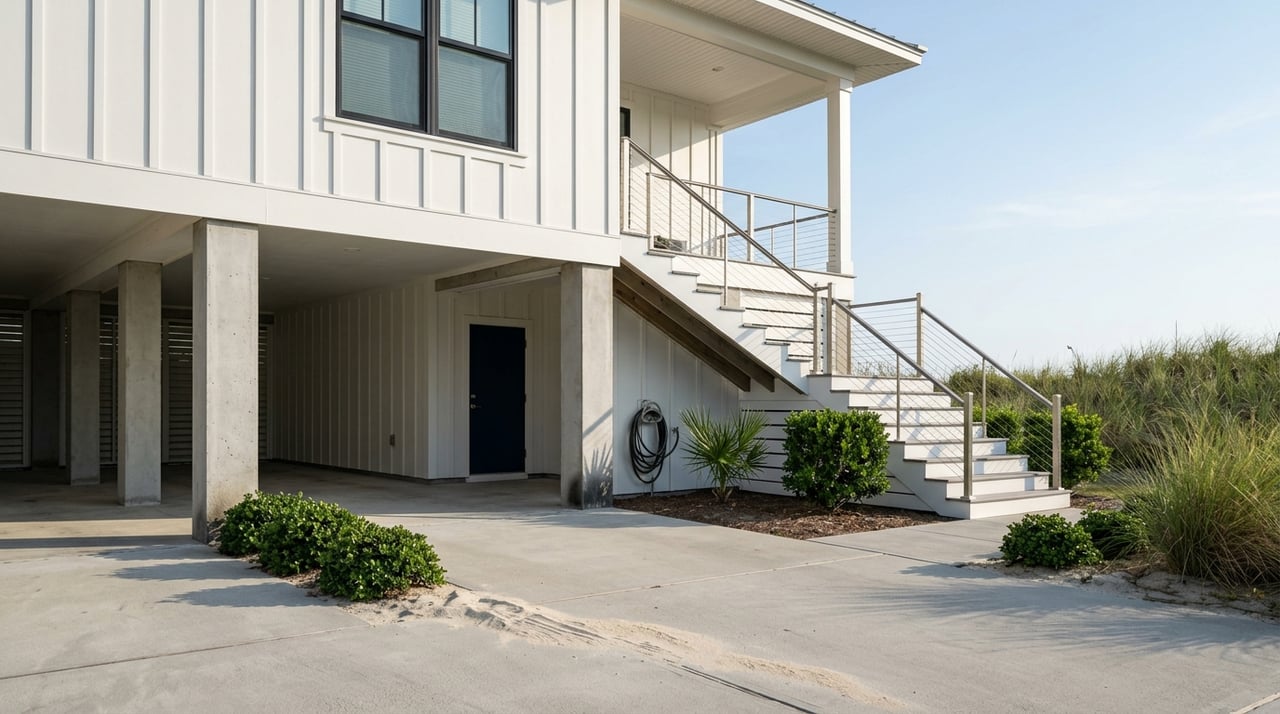
Detached homes in Sandbridge often appeal to buyers who want more privacy, more room, or a property that may better support a whole-home short-term rental strategy. They also tend to come with larger exterior maintenance responsibilities, especially in a coastal environment.
For some buyers, that tradeoff is worth it. The key is making sure the numbers work not just at closing, but year after year.
Budgeting for the true cost of ownership
The purchase price is only one part of the decision in Sandbridge. In a coastal second-home or investment scenario, your carrying costs can be significant and should be modeled early.
One of the biggest line items is real estate taxes. Virginia Beach assesses real estate at 100 percent of fair market value, and for FY2026 the citywide tax rate is $0.97 per $100 of assessed value, while the Sandbridge Special Service District rate is $0.98 per $100.
That means a combined rate of 1.95 percent. On a property assessed at $1 million, that works out to about $19,500 per year before any exemptions or relief.
Beyond taxes, buyers should also plan for:
- Flood insurance
- Wind and homeowners coverage
- Liability insurance if the property will be rented
- Seasonal vacancy
- Cleaning and turnover costs
- Storm preparation
- Exterior maintenance in salt air
These costs matter because Sandbridge is premium-priced, seasonal, and exposed to coastal conditions. A property that looks good on paper based on purchase price alone may feel very different once you add in the full ownership picture.
Flood risk is not a side issue
In Sandbridge, flood risk needs to be part of your first-round analysis, not a last-minute surprise. The city notes that about 60 percent of Sandbridge Road sits within the 100-year base flood elevation, and flooding can make it impassable.
That local detail matters because access, storm planning, and insurance all connect back to flood exposure. The city’s Nimmo Parkway Phase VII-B project is intended to improve reliability and connectivity for Sandbridge, but buyers should still understand current conditions before they commit.
Flood insurance should be treated as a core budget item. Standard homeowners and renters insurance generally do not cover flood damage, and flood policy pricing depends on factors like location, construction, and replacement cost.
The City of Virginia Beach can provide flood-zone determinations, and an elevation certificate may help with flood-insurance pricing. The city also notes that VE zones are coastal high-risk areas with wave hazard, so knowing the exact zone of a property is essential.
What to verify before you offer
Before you write an offer on a Sandbridge property, ask for a few key items right away:
- The property’s current flood zone
- Whether an elevation certificate exists
- Insurance quote options for wind, flood, and liability coverage together
- A realistic estimate of annual maintenance for coastal wear and tear
This is one of the fastest ways to avoid underestimating your monthly and annual costs.
Coastal maintenance is part of the investment
Beach property ownership comes with a different maintenance rhythm than many inland homes. Salt spray and moisture can lead to corrosion and decay in building materials, and coastal flooding can place added stress on stormwater and utility systems.
In practical terms, you should expect more frequent upkeep on exposed metal, decks, railings, exterior fasteners, and other salt-air components. This does not mean a property is a bad investment. It means your budget and expectations should match the environment.
Understanding short-term rental rules in Sandbridge
For buyers interested in rental income, Sandbridge offers a clearer path than many coastal areas. According to Virginia Beach, all properties in the Sandbridge Special Service District are eligible for whole-home short-term rental use.
That said, eligibility does not mean you can skip the process. Owners still need to meet the city’s requirements each year.
Sandbridge short-term rental requirements
To operate a whole-home short-term rental in the Sandbridge Special Service District, owners need:
- An annual zoning permit
- A $500 fee
- Life-safety and structural-safety inspections
- A parking plan with at least one off-street space per bedroom
- Proof of at least $1 million in liability insurance
- Annual registration with the Commissioner of the Revenue
If you are buying with rental income in mind, these items should be part of your upfront planning, not something you sort out after closing.
Know the rental tax picture
Sandbridge short-term rentals also carry a different lodging tax structure than the broader city baseline. The Commissioner of the Revenue says Sandbridge short-term rentals are taxed at 16.5 percent of gross rental charges plus a $2 per night flat room tax.
Elsewhere in Virginia Beach, the rate is 15 percent plus $2 per night. That difference may not stop a good investment, but it should absolutely be included in your income projections.
Rental demand is likely seasonal
Seasonality is a major part of the Sandbridge investment story. The city reports that lifeguards are on duty from Memorial Day weekend to Labor Day weekend, and the Sandbridge Beach Facility charges parking fees from May 1 through September 30.
The tourism bureau also notes that Virginia Beach is the number one vacation destination in Virginia and that tourism is one of the city’s largest industries. Taken together, that strongly suggests the strongest rental demand will likely be in late spring, summer, and early fall.
For you as a buyer, that means annual income planning should include high season and lower season, not just peak-week assumptions.
Personal use changes the math
If you plan to use the property yourself and rent it part of the year, the financial picture becomes more layered. The IRS says all rental income must be reported, and when a vacation home is used both personally and as a rental, expenses generally must be split between rental and personal use.
That is why it is smart to model the property under three separate scenarios:
- Second home only
- Pure rental property
- Mixed-use vacation home
A property can make sense under one structure and feel much tighter under another. Getting clear on that before you buy can help you avoid surprises later.
A smart Sandbridge due diligence checklist
If you want to buy with confidence, focus on the items that most affect risk, cash flow, and long-term enjoyment. In Sandbridge, the most important questions are usually not just about the home itself, but about how the property functions in a coastal, seasonal market.
Use this checklist as a starting point:
- Confirm the flood zone with the City of Virginia Beach
- Ask whether an elevation certificate is available
- Request bundled insurance quotes for homeowners, wind, flood, and liability needs
- Review the annual real estate tax impact using the city and special service district rates
- Verify whether your intended use is personal, rental, or mixed-use
- Review Sandbridge short-term rental permit and inspection requirements
- Estimate vacancy, turnover, and cleaning costs based on seasonal demand
- Budget for recurring coastal maintenance
- Ask your lender, tax professional, and property manager to model the property under multiple use scenarios
A careful review here can protect both your lifestyle goals and your investment strategy.
How to approach the decision with confidence
Buying a vacation or investment home in Sandbridge can be a strong move if you go in with clear expectations. The market is premium, the setting is distinctive, and the short-term rental framework is more defined than many buyers expect.
At the same time, this is not a market where you want to gloss over taxes, flood exposure, insurance, or maintenance. The buyers who feel best about their purchase are usually the ones who underwrite the full picture early and make decisions with good local data.
If you want a steady, detailed plan for buying in Sandbridge Beach, Debbie Childs can help you evaluate the numbers, compare property options, and move forward with confidence. Let’s Connect.
FAQs
What does it cost to buy a vacation home in Sandbridge Beach?
- Sandbridge is a premium market, with recent research showing condo examples from the low $400,000s to about $945,000 and single-family homes from roughly $1.115 million to $2.9 million.
What are the property taxes for a Sandbridge Beach home?
- For FY2026, the Virginia Beach city tax rate is $0.97 per $100 of assessed value and the Sandbridge Special Service District rate is $0.98 per $100, for a combined 1.95 percent.
Can you use a Sandbridge Beach home as a short-term rental?
- Yes. Properties in the Sandbridge Special Service District are eligible for whole-home short-term rental use, but owners must meet annual permit, inspection, parking, insurance, and registration requirements.
Why is flood insurance important for Sandbridge Beach buyers?
- Standard homeowners insurance generally does not cover flood damage, and flood risk is a major consideration in Sandbridge because local access and many properties are affected by coastal flood exposure.
Is rental income in Sandbridge Beach seasonal?
- It is likely seasonal, with the strongest demand expected from late spring through early fall based on local beach operations, parking seasons, and Virginia Beach tourism patterns.
What should you check before offering on a Sandbridge Beach property?
- Confirm the flood zone, ask for an elevation certificate, get insurance quotes, review taxes and rental rules, and model the property’s costs under your intended use scenario.